A favorite piece of jewelry should fit comfortably every day. Over time, finger sizes change due to weather, life events, or health shifts. When a favorite band begins to pinch or feels impossible to remove, Ring Resizing Up offers a direct solution to bring back a comfortable fit.
At HELMUT The Jeweler, our bench technicians bring over 109 years of combined experience to handle your fine jewelry with care. If you live near Show Low, AZ, you can bring your favorite pieces to our local shop for a full evaluation. This guide explains how jewelers make rings larger, which metals work best, and what to keep in mind before modifying your band.
Key Takeaways
- Primary Methods: Jewelers make rings larger by adding matching metal or stretching plain bands.
- Sizing Limits: Most gold, silver, and platinum rings can move up 1 to 2 full sizes safely.
- Metal Types: Precious metals size easily, while industrial metals like titanium or cobalt chrome cannot be resized with heat.
- Stone Protection: Accent stones and delicate settings require careful inspection before any sizing work begins.
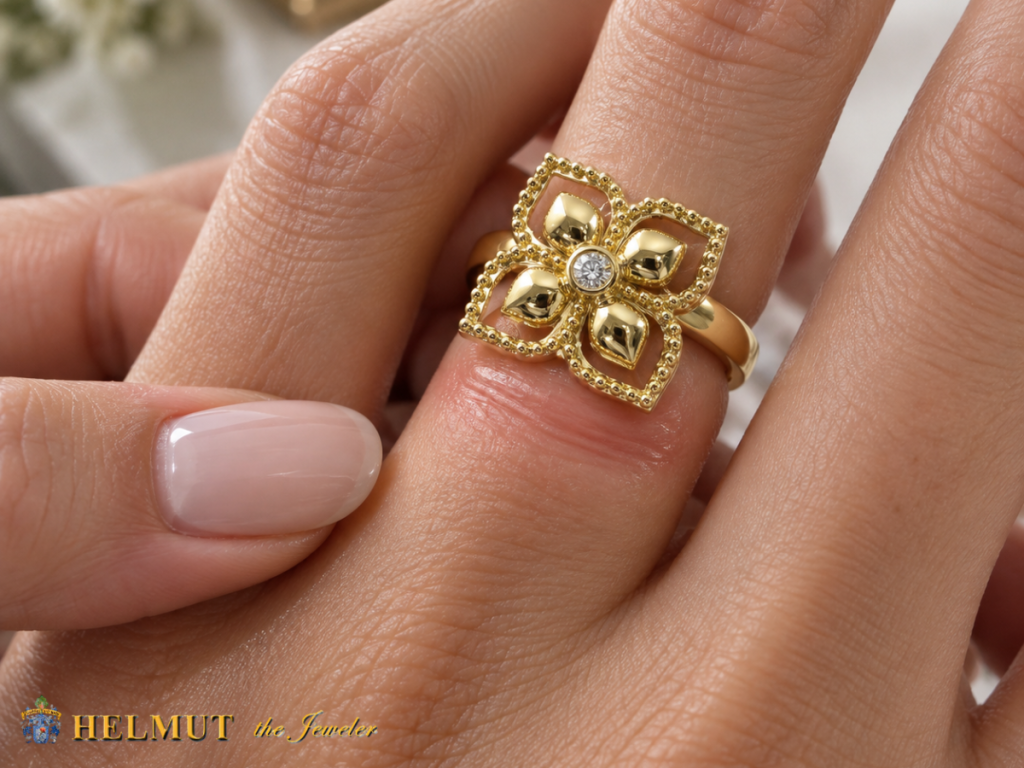
Understanding Why Rings Become Tight
Fingers change shape throughout life. A piece that fit perfectly five years ago may feel snug today. Understanding these natural changes helps you determine when it is time to adjust your band.
Common reasons you may need a larger fit include:
- Seasonal Swelling: Summer heat and humidity cause body tissues to expand, making bands feel tighter.
- Weight and Health Changes: Gaining weight, fluid retention, or joint inflammation from arthritis can change knuckle size.
- Inherited Keepsakes: Family heirloom items often come in sizes that do not match the new owner.
- Daily Activity: Hand movements during work or exercise can alter how tight a band feels throughout the day.
If a band leaves deep red marks, causes discomfort, or requires soap to slide off, it is time for an adjustment.
Jewelry Repair Guide: How Sizing Up Works
Master goldsmiths use two main methods to make a band larger. The right approach depends on the ring style, the metal, and how much space needs to be added. Learn more about our complete jewelry repair offerings to see how we care for your pieces.
Method 1: Adding Metal to Expand the Band
Adding matching material is the standard method for increasing a ring size by half a size or more. This process keeps the band thick and strong.
The bench jeweler follows these steps:
- Cutting the Band: The jeweler makes a clean cut at the bottom of the band (the shank).
- Opening the Gap: The metal is pulled open to match the exact new target size.
- Inserting New Material: A small piece of matching precious metal (same karat and color) is inserted into the gap.
- Soldering or Laser Welding: High heat fuses the new metal piece securely to the original band.
- Smoothing and Polishing: The area is blended, sanded, and polished until the join is smooth.
Pro Tip: Laser welding creates strong joins with lower heat, which protects nearby gemstones from thermal damage during the repair.
Method 2: Shank Stretching for Minor Adjustments
Shank stretching is a quick method used only for small adjustments on plain metal bands.
Important facts about stretching include:
- Size Limit: It works best for increases of half a size or less.
- Ring Style: It is safe only for plain bands without stones, engravings, or patterns.
- Process: The jeweler places the plain band on a mechanical stretcher that gradually pulls the metal outward.
- Risk Factor: Stretching thins out the metal walls. Stretching a thin band too much can weaken the ring structure or cause breaks.
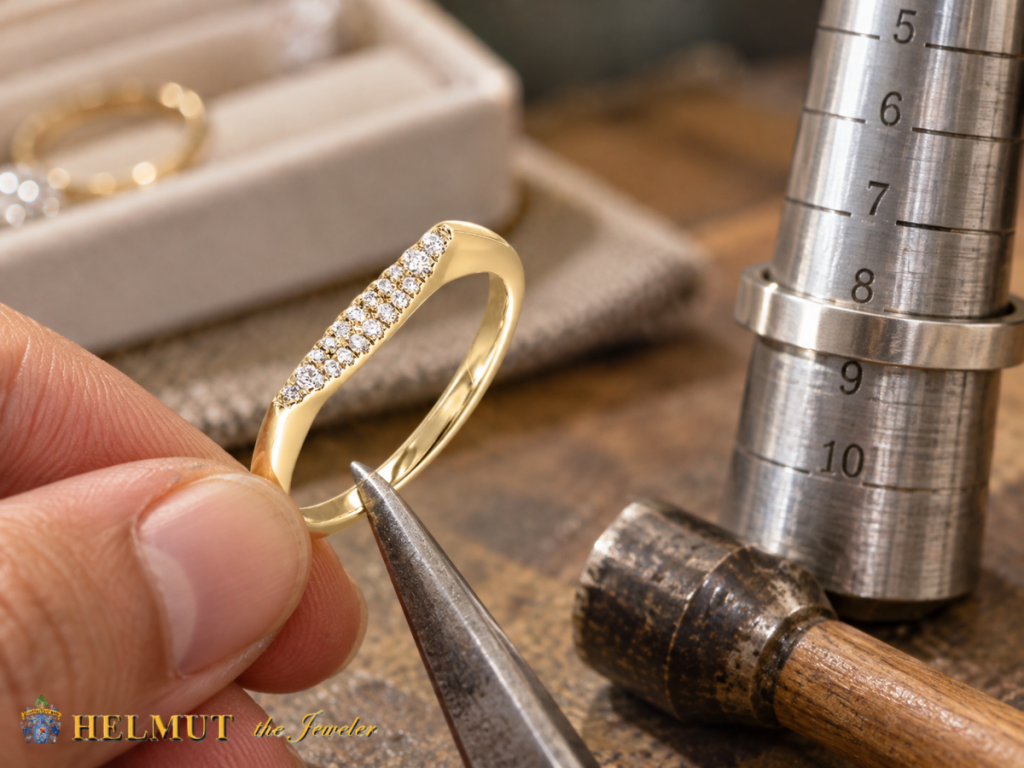
Sizing Up Limits Across Different Metals
Not all metals respond to heating and stretching in the same way. Gold, platinum, and silver adjust easily, while modern alternative metals require replacement or non-traditional tools.
The table below details how various jewelry metals handle being resized larger:
| Metal Type | Resizing Ability | Common Method | Safety Considerations |
| 14K Gold (Yellow, White, Rose) | High | Adding metal | Excellent for sizing up to 2 full sizes. |
| Platinum | High | Adding platinum | Requires high-heat welding; maintains pure white finish. |
| Sterling Silver | Moderate | Adding silver | Easy to work with, but solder seams can tarnish over time. |
| Titanium | Very Low | Special stretching only | Cannot be soldered with heat; major size shifts are impossible. |
| Tantalum | Very Low | Special machining | Rare metal with high crack resistance; difficult to resize. |
| Zirconium | None | Replacement needed | Black layer cannot be resoldered without ruining the finish. |
| Cobalt Chrome | None | Replacement needed | Extremely durable and crack resistant; cannot be soldered. |
When selecting bands for long-term wear, precious metals offer the greatest flexibility for future adjustments.
Factors That Affect the Sizing Process
A jeweler must examine the entire structure of a piece before starting work. Certain design elements limit how much a piece can expand.
Stone Settings and Channel Sets
Gemstones react to metal movement. When a metal band expands outward, the curve of the top section flattens slightly. This movement can loosen prongs and mountings.
- Solitaire Settings: Easy to adjust because stones sit on top away from the bottom cut.
- Channel-Set Stones: Difficult to size up because spreading the band opens channel walls, risking dropped stones.
- Eternity Bands: Stones wrapped around the entire band mean there is no plain metal area to cut or add material.
Band Thickness and Engravings
The physical dimensions of the band determine how structural changes affect the final design.
- Thin Bands: Very thin shanks may need a shank replacement if adding metal weakens the structure.
- Patterned Surfaces: Cut patterns, milgrain, or outer engravings may be interrupted at the cut point.
- Inside Engravings: Text printed inside the band may be partially removed during cutting or polishing.
Key Insight: A thorough pre-repair inspection identifies loose stones and surface details before any heat or pressure is applied to the metal.
What to Expect During the Repair Process
At HELMUT The Jeweler, we complete all repairs locally in our shop. Our team performs double-check inspections on every piece before returning it to your hands.
Here is what happens when you bring your ring in for adjustment:
- Size Measurement: The jeweler measures your finger with sizing rings to select the exact fit.
- Structural Inspection: The technician checks stone security, metal thickness, and setting integrity.
- Work Plan: The craftsman chooses between adding material or light stretching based on ring style.
- Bench Work: The adjustment is completed using gold, silver, or platinum techniques.
- Quality Check: The item passes two separate inspection points to confirm quality and stability.
- Cleaning and Polish: The ring is polished, cleaned in an ultrasonic bath, and returned ready to wear.
To ask questions about your piece, please contact us before visiting.
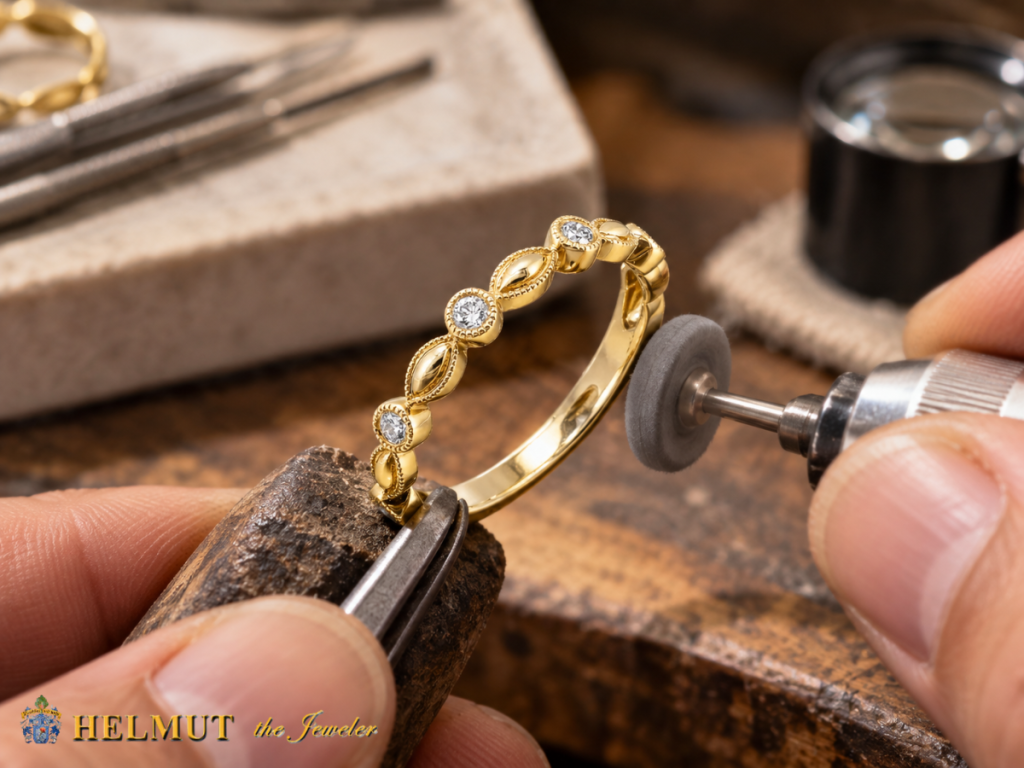
Alternatives When a Band Cannot Be Sized Up
Some items cannot undergo heat modifications without damaging the stones or structural patterns. If your band falls into this category, you still have options.
Consider these alternatives:
- Re-casting the Mounting: Transferring your original stones into a newly cast setting built to your current size.
- Creating a Custom Ring: If a heirloom piece cannot be cut, designing a fresh custom ring lets you incorporate original stones into an updated look.
- Sizing Beads or Liners: Used when knuckles are large but the base of the finger is small (keeps the ring upright).
- Pendant Conversion: Wearing an un-sizable ring as a drop pendant on a chain close to your heart.
Frequently Asked Questions
How much bigger can a ring be resized?
Most precious metal rings can safely go up 1 to 2 sizes. Going beyond 2 sizes may weaken the shank or distort channel-set stones, requiring a full shank replacement instead.
Will resizing up leave a visible seam?
When done by a master bench jeweler, the join line is polished smooth and completely invisible to the naked eye.
How long does it take to get a ring sized up?
Local repairs at HELMUT The Jeweler are completed on-site, typically taking less than two weeks from drop-off to final quality check.
Can alternative metals like titanium be sized up?
Industrial metals like titanium, cobalt chrome, and black zirconium cannot be cut and soldered like precious metals. They allow for very limited stretching at best or must be replaced.
Keep Your Jewelry Fitting Comfortably
A tight ring should not sit unworn in a drawer. Modern goldsmith techniques allow master craftsmen to enlarge your valuable rings safely while maintaining their original strength and design.
As a family-owned business operating since 1972, 3 generations and a over 1/2 century later, HELMUT The Jeweler treats every customer item with maximum care. Visit our store in Show Low, AZ, to have your finger measured and discuss the best adjustment method for your fine jewelry.





0 Comments